
*Affiliate Bartending School in Detroit, Michigan:
*All American Bar and Casino Trainers
Call about this month's Special Promotion
Call Today!
* = Designates an affiliate school.
Bartending School in Detroit
Detroit, Michigan
28313 Southfield Road,
Lathrup Village, Michigan 48076
1-866-ICANMIX
(1-866-422-6649)
(248)-569-9105
Call school for pricing specials.
9:30 AM - 10:00 PM
Weekends 9:00 AM - 5:00 PM

ABC Bartending Schools has a affiliate bartending school in Detroit, Michigan. Affiliate graduates have the right of job placement assistance in any of ABC Bartending Schools nationwide locations. Refresher courses are not provided by this affiliate location.
Bartenders are known for their ability to make great money while meeting new people and having lots of fun at their jobs. Look around you at the number of liquor serving establishments and the number of bartenders (full time and part time) that it takes to staff these establishments.
Read what the Management at Vicente's Cuban Cuisine says about our school. Click Here
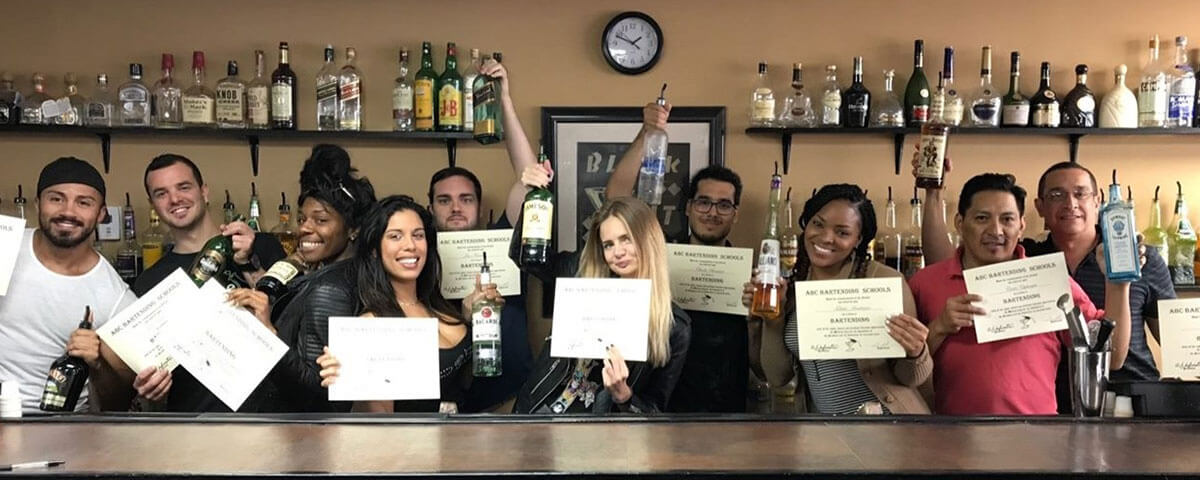
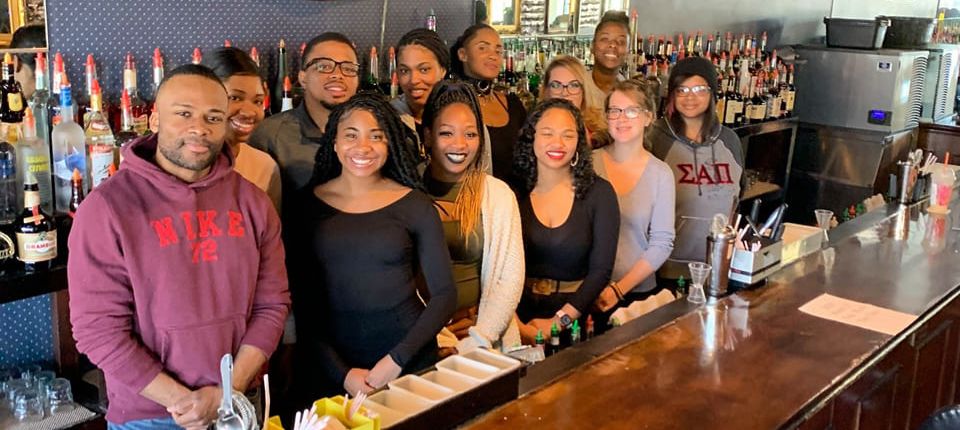
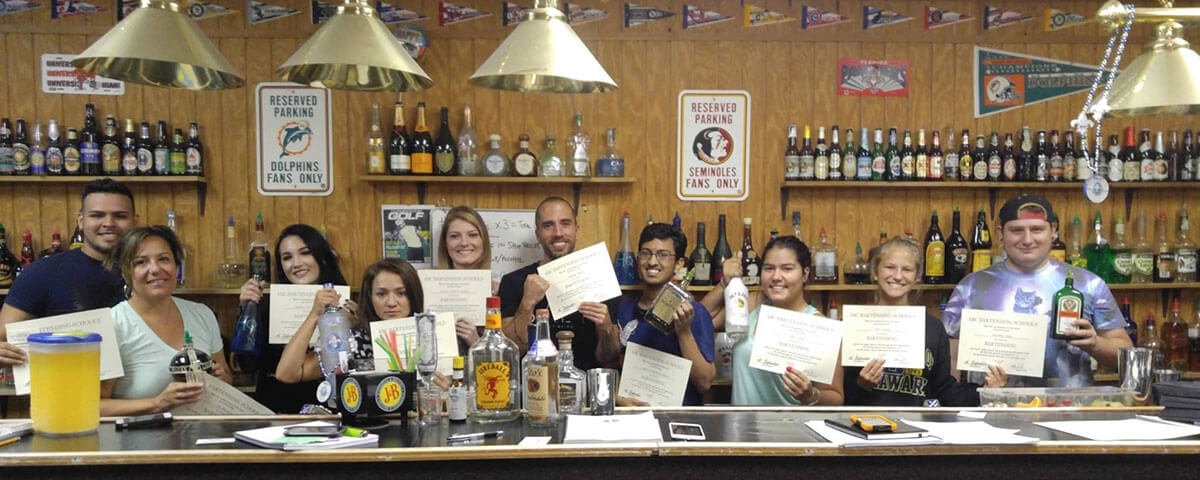
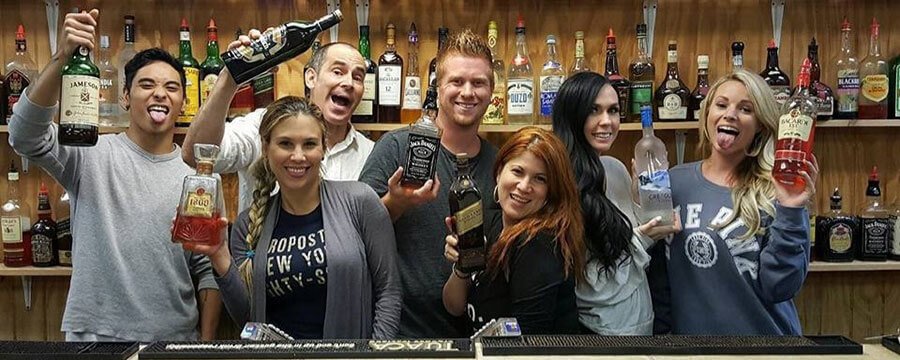
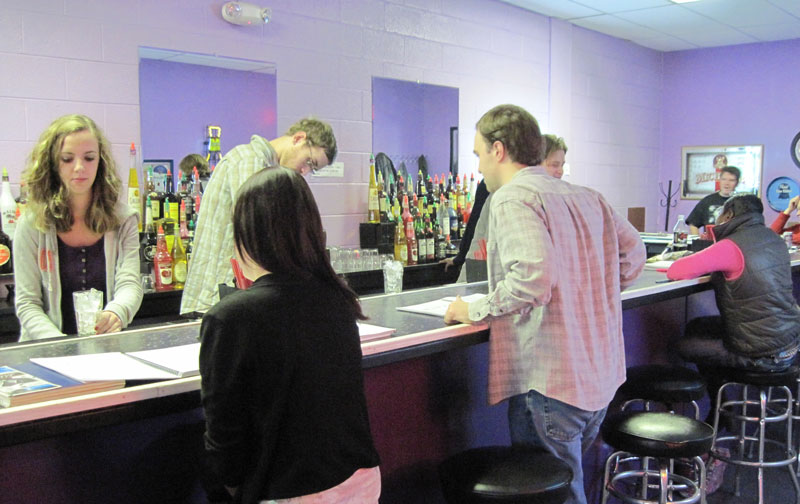
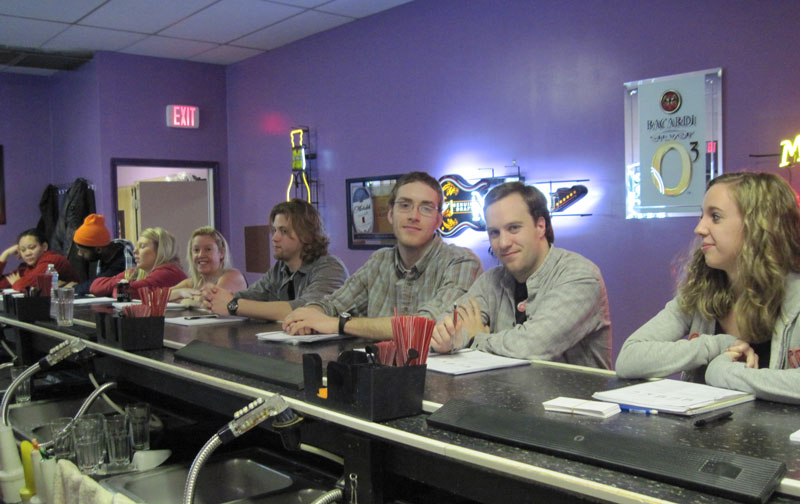
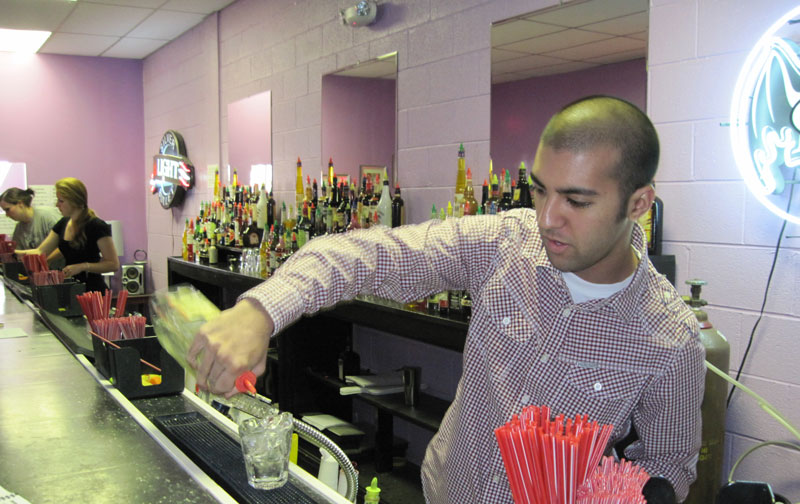
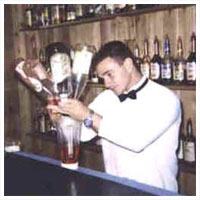 If you are 18 years of age or older, you could be in this picture, training in just 40 hours to become a professional mixologist.
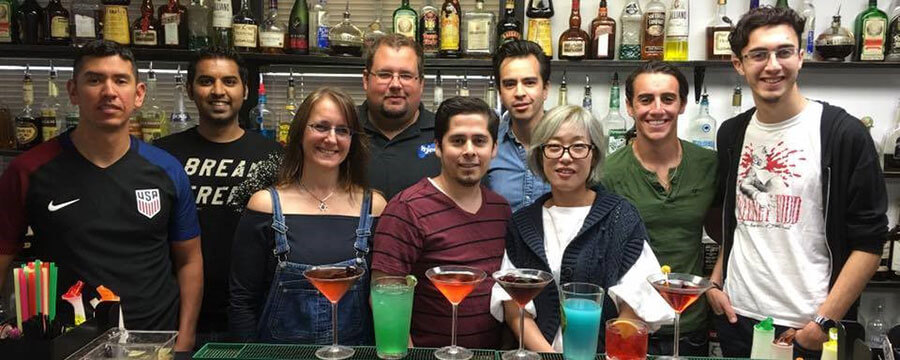
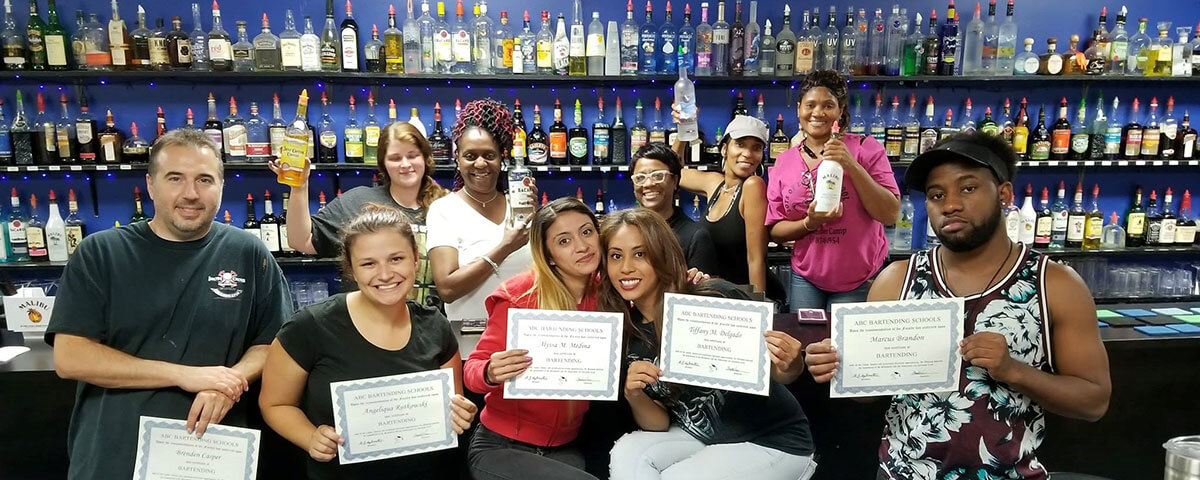
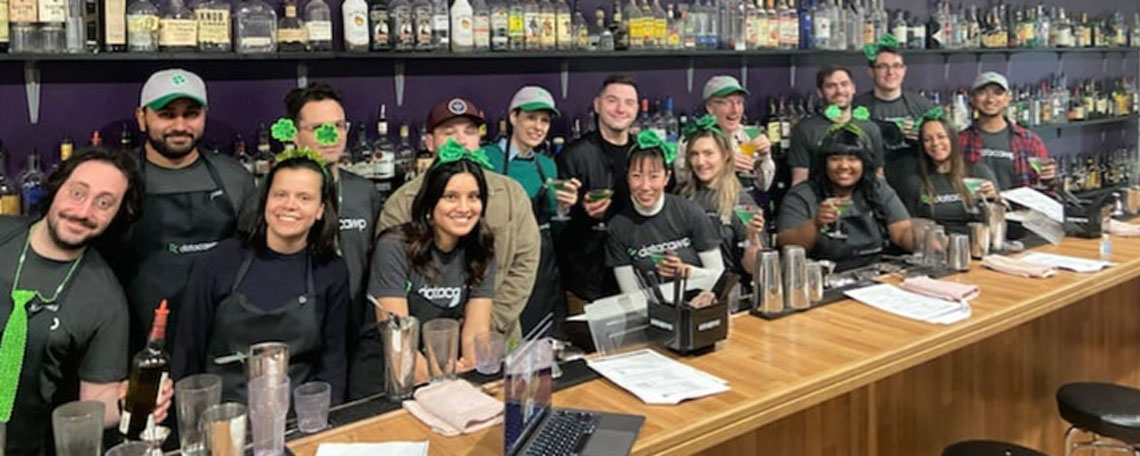
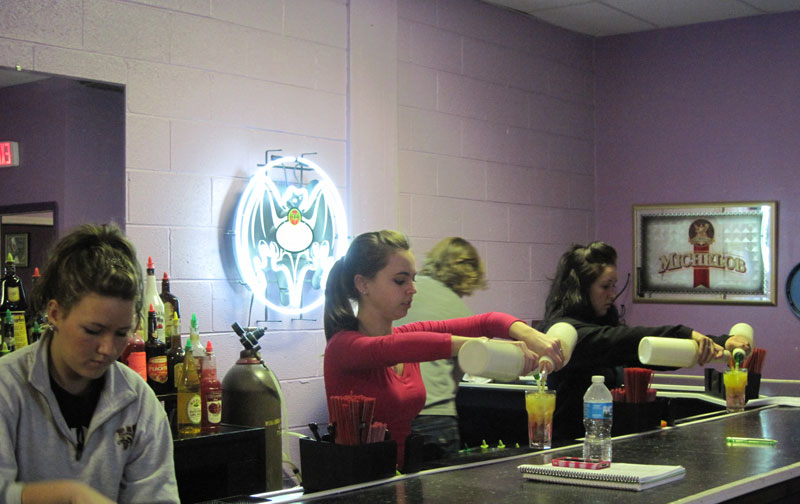
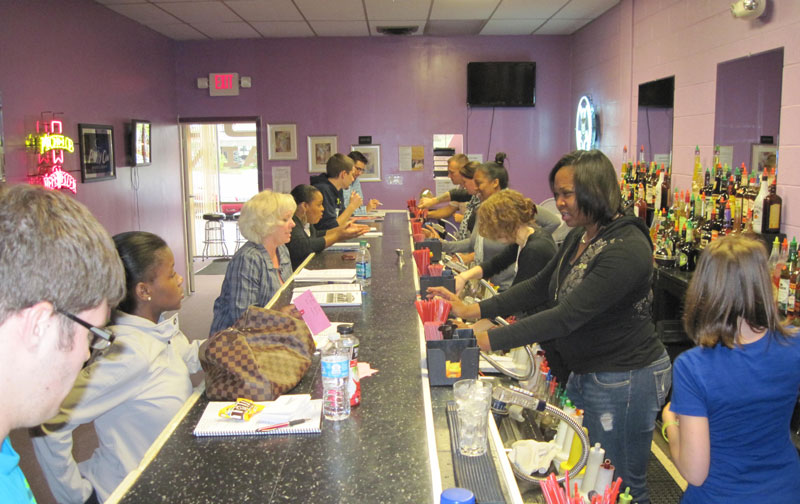
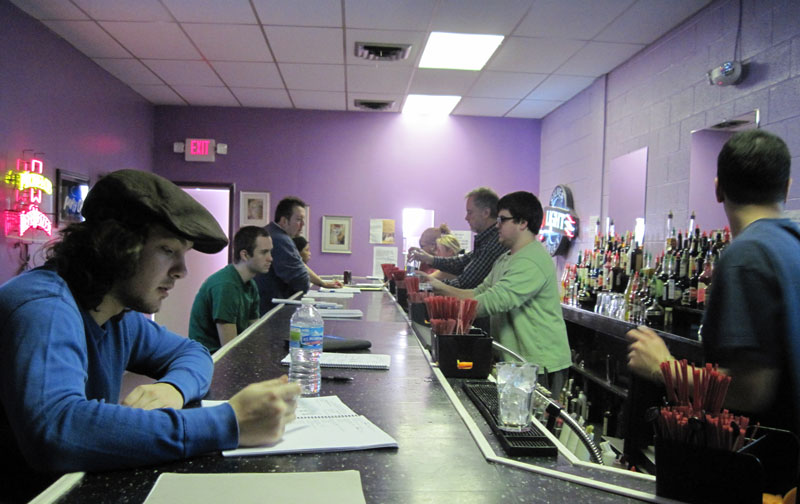
Here are some of our recent graduates, plus remember ABC offers small classes for better, one on one, instruction and job placement assistance. At ABC we don't overcharge you for classes, we give you more for a lot less then other schools do.

Casino dealer students hopeful outside training will lead to jobs in 2012
January 02, 2010, 10:00AM
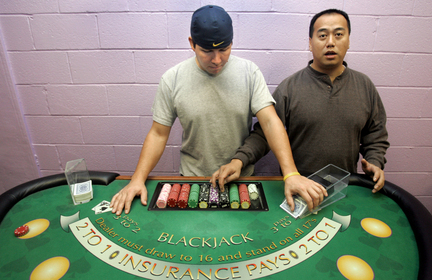
Lee Chau, right, works with student Gordy Bivens to show fellow students how to position themselves at a gaming table.
FARMINGTON HILLS, Mich. — Before students get to deal a game of chance in Lee Chau's class -- and get a shot at a steady paycheck working in a casino -- they must learn how to shuffle and count.
"Come on now, 20 at a time," Chau coached Rose Leitaert, a 57-year-old laid-off restaurant worker from Michigan, as she tried to pick up a stack of chips with one hand in a recent class. "They aren't going to let you work unless you can hold them all at once."
Chau teaches poker and casino games such as blackjack, roulette and craps. The classes at ABC Bartending/Casino School use Monopoly money.
He instructs dozens of students weekly, mostly unemployed workers from Michigan and Ohio who are taking a chance at learning a new career that can pay up to $60,000 a year. Some hope their investment in his class will land them one of the 7,500 full-time jobs estimated to be coming to Ohio's new casinos. The jobs come courtesy of Issue 3, which voters approved in November to allow full-service casinos in Columbus, Cincinnati, Toledo and Cleveland.
Gaming should begin in 2012.
Though dealers are not required to have certifications to work in casinos, graduates of the Bartending and Casino College say the courses have given them the skills to properly deal cards, a proficiency that casinos look for when hiring.
"I think this shows the community and residents of Ohio are anxious for the jobs Issue 3 will bring and they are preparing themselves," said Jennifer Kulczycki, a spokeswoman for Quicken Loans, owned by Cleveland Cavaliers owner Dan Gilbert, who won the right in November's vote to build the Cleveland and Cincinnati casinos.
The ABC Bartending and Casino School plans to open a school in Cleveland next spring and add the casino course to a bartending school the company runs in Columbus.
"We figured it would only be a matter of time before casinos would come to Ohio because they were losing too much money to Michigan and West Virginia," Chau said.
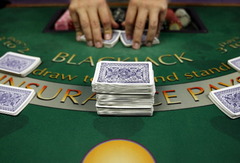 Students at the ABC Bartending and Casino School Training practice the proper way to shuffle cards.
He said that since 2008, he has trained nearly 200 Ohio residents, many from Northeast Ohio. The former Atlantic City card dealer and Motor City Casino supervisor said he fields dozens of calls weekly from Ohioans who want to sign up for his course.
"Who wouldn't want this job?" Chau said. "You get 20-minute breaks every hour, you get to eat good food for free and work with people. . . . All you need is the knowledge and know-how of the game.
"The only bad thing is that you gain 40 pounds from all of the standing and eating you do."
John Pifer, who directs the ABC Bartending and Casino School in Detroit, said the casino jobs beckon to people who have been hurt by the economy.
"This is a very low-stress job, and you don't have to be a rocket scientist to do it," Pifer said. "It is something an average guy can go do and make $50,000 to $60,000 a year. Gaming survives all economies."
Hours spent at the tables
At the suburban Detroit school, aspiring card dealers spend 40-plus hours a week practicing with current or former professional dealers who show them the techniques they need to use while on the other side of the casino table.
For about $1,000, the students learn how to properly count chips, manage a game and deal blackjack and basic poker games, all while training close to 300 hours for a dealer certification. Tuition increases as students learn more games.
Instructors even test a student dealer's awareness by adding chips after the bet, causing distractions at the table by asking for change during a bet or hiding cards. The idea is to prepare students for what happens in a real casino.
When Leitaert was in class this month, the hardest lesson for her was counting and grabbing a stack of 20 chips with one hand while simultaneously paying another player.
Chau took a handful of chips, put them close to her eyes and told her to count by feeling the grooves. He explained that dealers must learn to handle chips quickly because it speeds the flow of the game.
"The most important thing is game management," Chau told his students. "You have to understand that at the casino, nobody trusts anybody. The player doesn't trust the dealer, the dealer doesn't trust the player, the floor doesn't trust the dealer and the house doesn't trust the floor."
Looking for an edge in hiring
A school like Chau's is not the only place for people to learn how to deal.
Bob Tenenbaum, a spokesman for the two Ohio casino developers, Rock Ventures and Penn National Gaming, said the owners would probably provide floor training for people they hire.
Northeast Ohio residents and others who have gradated from the ABC Bartending and Casino School said they think they'll have an edge when applying for casino jobs in Ohio.
"When the opportunity comes, I am going to take a shot at it," said Joseph Pandrea, a 35-year-old Canton native who works at Mountaineer Casino in West Virginia.
Pandrea, a 2007 ABC graduate who deals such games as Omaha, blackjack and Texas hold 'em, said the school helped him.
"I was hoping Issue 3 would pass before, but it didn't, and I had to come down here," Pandrea said. "I have some actual experience, though, and this will help me out when I apply."
During this year's Issue 3 campaign, Adam Smith handed out stickers and posters to urge voters to pass the measure. When they did, the 24-year-old Dayton-area resident traveled to the bartending and casino college in Michigan to earn a blackjack dealer certification. The airport worker said he is ready for the job.
"The more games you know, the better the chance you can end up in the casino," Smith said. "They say these jobs are for Ohio, and I am going to do what I can to be one of the first people to get one."
Jadia Norman of Cleveland spent several stints at the Hard Rock Casino in Seminole, Fla., as a blackjack dealer after graduating from the class last year. The nursing student said she spent a few weeks this past summer working at casinos to help supplement her income.
"To be honest, I don't think they will hire dealers around here," Norman said. "A person with experience is more attractive than a break-in dealer."
Though many students in Chau's class live in Michigan, they share a bond with Ohio residents: high foreclosure rates, unemployment and hard times. They said casinos offer hope.
Kulczycki, Gilbert's spokeswoman, said state legislators will decide how many tables a casino will run, which will determine the number of dealers a casino will hire. She stressed that the bulk of the jobs will go to Ohio residents.
"I am sure we will look to people with experience," she said.
Lenny Giampino, 53, of Wixom, Mich., has spent the last nine weeks at Chau's school. He has been certified to deal more than a dozen casino and poker games. The 30-year accountant turned to the school after he was laid off from a steel company two years ago.
"I spent a lot of money, but I look at it as a small investment into the future," Giampino said. "If I can get a job that pays well, it will be all worth it."
Gordy Bivens, 32, of Hastings, Mich., a former iron worker who has been out of work for more than a year, said he would move to Ohio for a casino job. He had been a student for two weeks.
"I've been out there looking for work, but it is hard without experience," the father of two said. "If the jobs are going there, that is where I will be."
Videos with Questions and Answers from the Owner of ABC Bartending Schools:

ABC Bartending On Home and Lifestyle TV: Home and Lifestyle TV - 3:57

Look at what NBC News Around Town has to say about ABC Bartending in Fort Worth, Texas: NBC News Around Town - 01:14

Watch NBC Channel 8 about ABC Bartending School. Full size version: Click Here - 4:12

Look at what ABC News has to say about ABC Bartending in Phoenix Arizona: ABC News Local Phoenix - 01:45
Convenient Class Schedules | |
1 Week Afertoon | Mon. - Fri. |
2 Weeks Morning | Mon. - Fri. |
2 Weeks Afternoon | Mon. - Fri. |
2 Weeks Weekend | Saturday & Sunday |
Adjusted schedules are available. | |
- Set up / Changing Shifts / Closing Out
- Customer Service
- Basic Bar Equipment
- Bar Terms
- What Glass for What Drink
- Free Pouring / Mixing Techniques
- Mixing Cocktails - Simple and Fancy (from Shooters to Irish Coffee)
- Liquor Encyclopedia
- Beers / Wines / Champagnes
- Cash Registers / Money Handling / Charge Procedures
- Tipping
- Catering Private Parties
- Job Interview Techniques
Job Placement Assistance, Too! | ||
Our placement staff is here to help you find work throughout the Detroit area, as well as nationally, on an ongoing basis. Free refresher courses also available to all our graduates. | ||
Establishment |
Graduate |
|
Buffalo Wild Wings Grand Blanc |
Jennifer McCarley |
|